
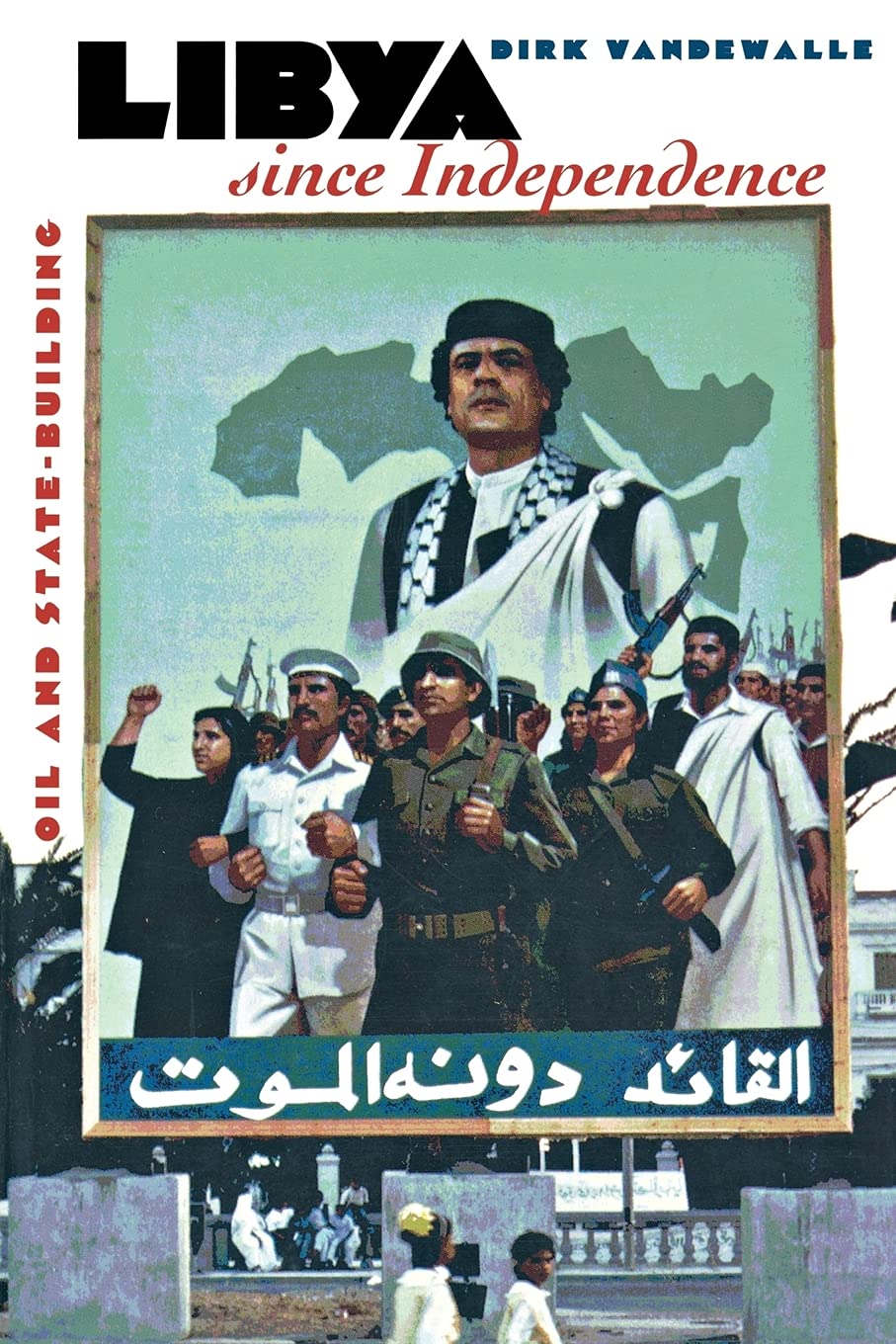
Libya since Independence: Oil and State-building
Produktdetails
| Artikelnummer | 233574384 | Erscheinungsdatum | 2026/06/27 | Listenpreis | €14.28 | Modellnummer | 233574384 | ||
|---|---|---|---|---|---|---|---|---|---|
| Kategorie | |||||||||
Although Libya and its current leader have been the subject of numerous accounts, few have considered how the country's tumultuous history, its institutional development, and its emergence as an oil economy combined to create a state whose rulers ignored the notion of modern statehood. International isolation and a legacy of internal turmoil have destroyed or left undocumented much of what researchers might seek to examine. Dirk Vandewalle supplies a detailed analysis of Libya's political and economic development since the country's independence in 1951, basing his account on fieldwork in Libya, archival research in Tripoli, and personal interviews with some of the country's top policymakers. Vandewalle argues that Libya represents an extreme example of what he calls a "distributive state," an oil-exporting country where an attempt at state-building coincided with large inflows of capital while political and economic institutions were in their infancy. Libya's rulers eventually pursued policies that were politically expedient but proved economically ruinous, and disenfranchised local citizens. Distributive states, according to Vandewalle, may appear capable of resisting economic and political challenges, but they are ill prepared to implement policies that make the state and its institutions relevant to their citizens. Similar developments can be expected whenever local rulers do not have to extract resources from their citizens to fund the building of a modern state. Read more
Korrektur der Produktinformationen
Wenn Sie Unvollständigkeiten oder Fehler in den Produktinformationen auf dieser Seite bemerken, nutzen Sie bitte das Korrekturformular unten.
Korrekturanfrage